Ecology (Master’s Program)

ILIA STATE UNIVERSITY

The Ecology Master’s Program aims to prepare competitive researchers in the field of biodiversity research and ecology. Using the latest knowledge and contemporary methods, graduates will be able to independently plan and conduct research in animal ecology, plant ecology, or environmental protection according to international standards. Graduates will be equipped with analytical skills and the ability to make autonomous decisions. They will be able to communicate effectively with professional and academic communities.

Degree awarded: Master of Science in Ecology

Language of instruction: Georgian

Program duration: 120 ECTS credits, 4 semesters

Why Should You Choose the Ecology Master's Program at Ilia State University

Experienced Academic Staff and International Collaboration

Academic staff involved in the program are actively engaged in international-level research projects and are well-acquainted with current trends and challenges in the field. The program considers research in regional, national, and local contexts. Collaboration with partner organizations in the research component promotes employment of graduates and deepens problem-oriented learning.

Development of Practical Skills

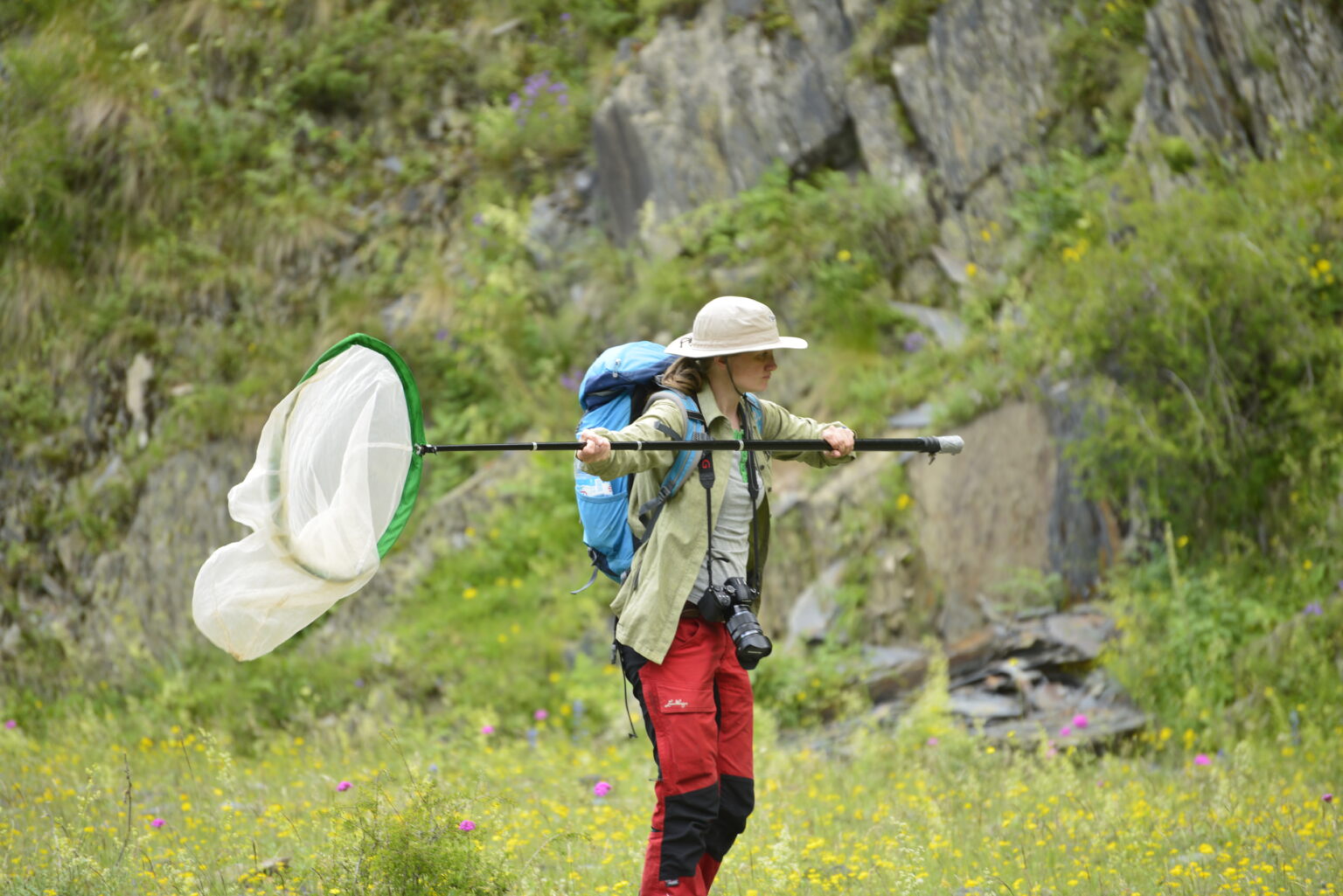
Special emphasis is placed on developing practical skills, including fieldwork and laboratory techniques, as well as mastering modern data processing methods.

Modern Laboratories and Field Bases

Students will engage in research at the Institutes of Ecology, Botany, and Zoology. They will use the technical resources of laboratories located on the university campus (Forest Ecology Laboratory, Zoology Laboratory, Entomology Laboratory, Plant Research Laboratory, Molecular-Genetic Laboratory) and field bases in Georgian regions (field stations in Stepantsminda, Dedoplistskaro, and Grigoleti), as well as the research vessel "Saint Ilia."


Program Director

Professor Davit Tarkhnishvili – david_tarkhnishvili@iliauni.edu.ge


Employment Opportunities

Graduates of the Ecology Master's Program can be employed:

  • In governmental and non-governmental organizations related to the protection and rational use of natural resources – national parks, reserves, forestry, fisheries, and hunting enterprises
  • In government agencies, national and international environmental non-governmental organizations
  • In institutions related to the preservation of animals and plants – zoos, botanical gardens, natural history museums
  • In scientific institutions – universities, research institutes, and laboratories


Particularly successful graduates can continue their studies at the doctoral level.

Admission to the master’s program is based on the general master’s examination and an internal university examination.

Students wishing to pursue a master’s degree must hold a bachelor’s degree or equivalent academic qualification in one of the following fields:

  • Natural sciences, mathematics and statistics (any detailed field within this broad area)
  • Agriculture, forestry, fisheries, veterinary science
  • Healthcare or psychology


During the internal university examination, student motivation is assessed, as well as basic knowledge in the following areas: awareness of ecological problems and issues, general biology, and basic natural sciences. Additionally, English language proficiency is evaluated (minimum B1 level).


The examination is conducted in accordance with the procedures established at Ilia State University.

The Ecology Master’s Program includes 120 ECTS credits. Within the program, students must accumulate 120 credits, including:

  1. Mandatory courses – 24 credits
  2. Animal ecology block – min. 12 credits
  3. Plant ecology block – min. 12 credits
  4. Environmental protection and sustainable development block – min. 18 credits
  5. Methodological block – min. 12 credits
  6. Communication block – 6 credits
  7. Elective courses – max. 12 credits
  8. Master’s thesis – 24 credits


Instead of elective courses, students have the right to take additional courses from other blocks, except the communication and mandatory blocks.

Resources and Research

Educational Laboratories

  • Dendrology Laboratory
  • Entomology Laboratory
  • Plant Research Laboratory
  • Zoology Laboratory
  • Complex Environmental Study Laboratory
  • Geoinformation Systems (GIS) Laboratories
  • Molecular-Genetic Laboratory

Research Institutes and Centers

  • Institute of Ecology
  • Institute of Zoology
  • Institute of Botany
  • Wildlife Disease Ecology Center
  • Leibniz Center for Caucasus Biodiversity Research

University Research Field Bases

  • Kazbegi
  • Grigoleti
  • Dedoplistskaro
  • Akhalkalaki
  • Bakuriani

Research Vessel

Special equipment for studying Black Sea ecosystems

Partner Organizations

  • German Society for International Cooperation (GIZ)
  • German Academic Exchange Service (DAAD)
  • World Wildlife Fund (WWF)
  • Agency of Protected Areas
  • National Forestry Agency

Academic Staff Research Areas

  • Black Sea cetacean ecology
  • Wildlife and bird disease ecology
  • Conservation ecology
  • Biodiversity research and molecular ecology
  • Population genetics
  • Caucasus biodiversity barcoding
  • Evolutionary ecology
  • Cave ecology
  • Aquatic biome ecology
  • Herpetology
  • Invertebrate ecology
  • And many other interesting projects

Academic Staff and Their Research Interests

  • For information about staff involved in the program, see the program catalog, and for their research interests, see the link.